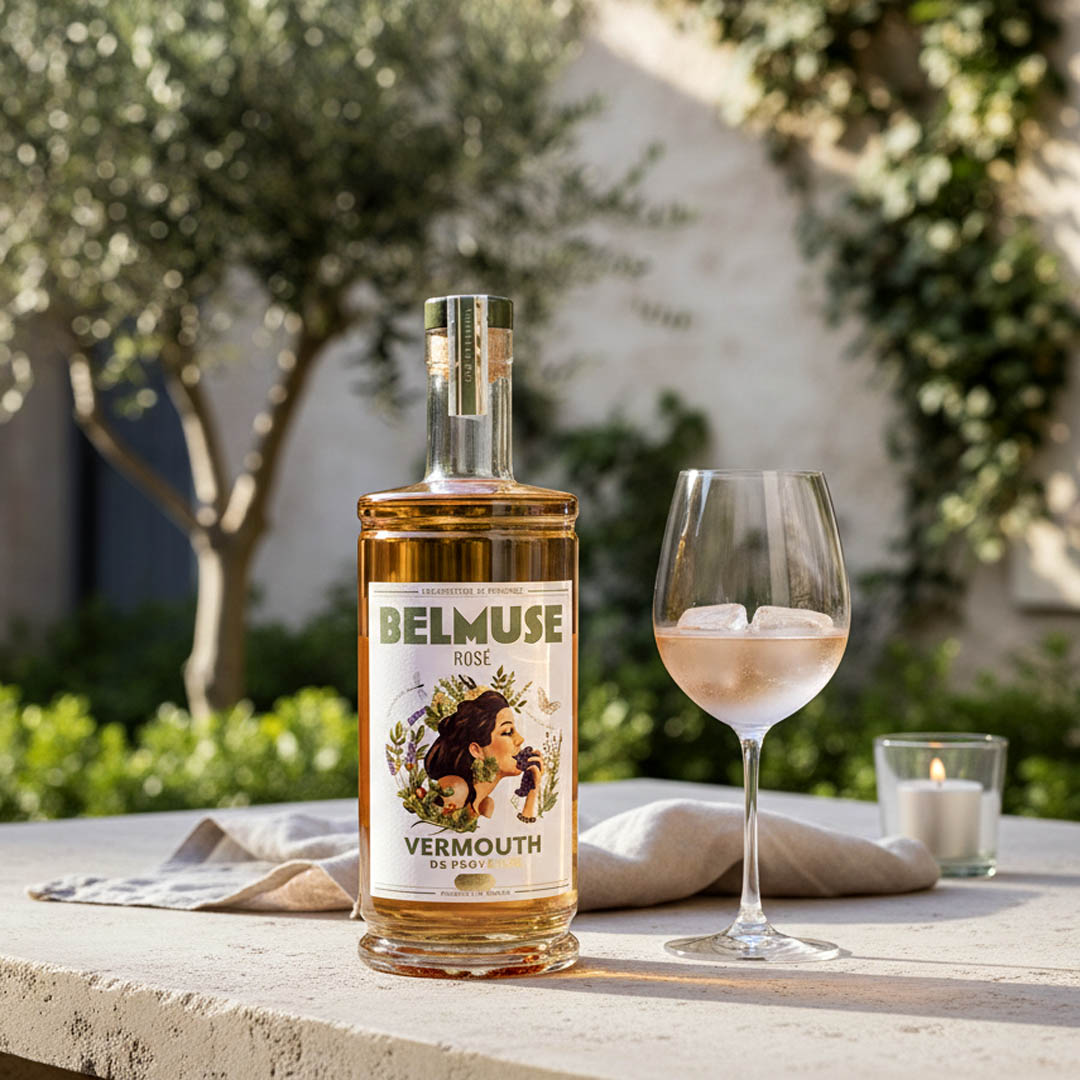
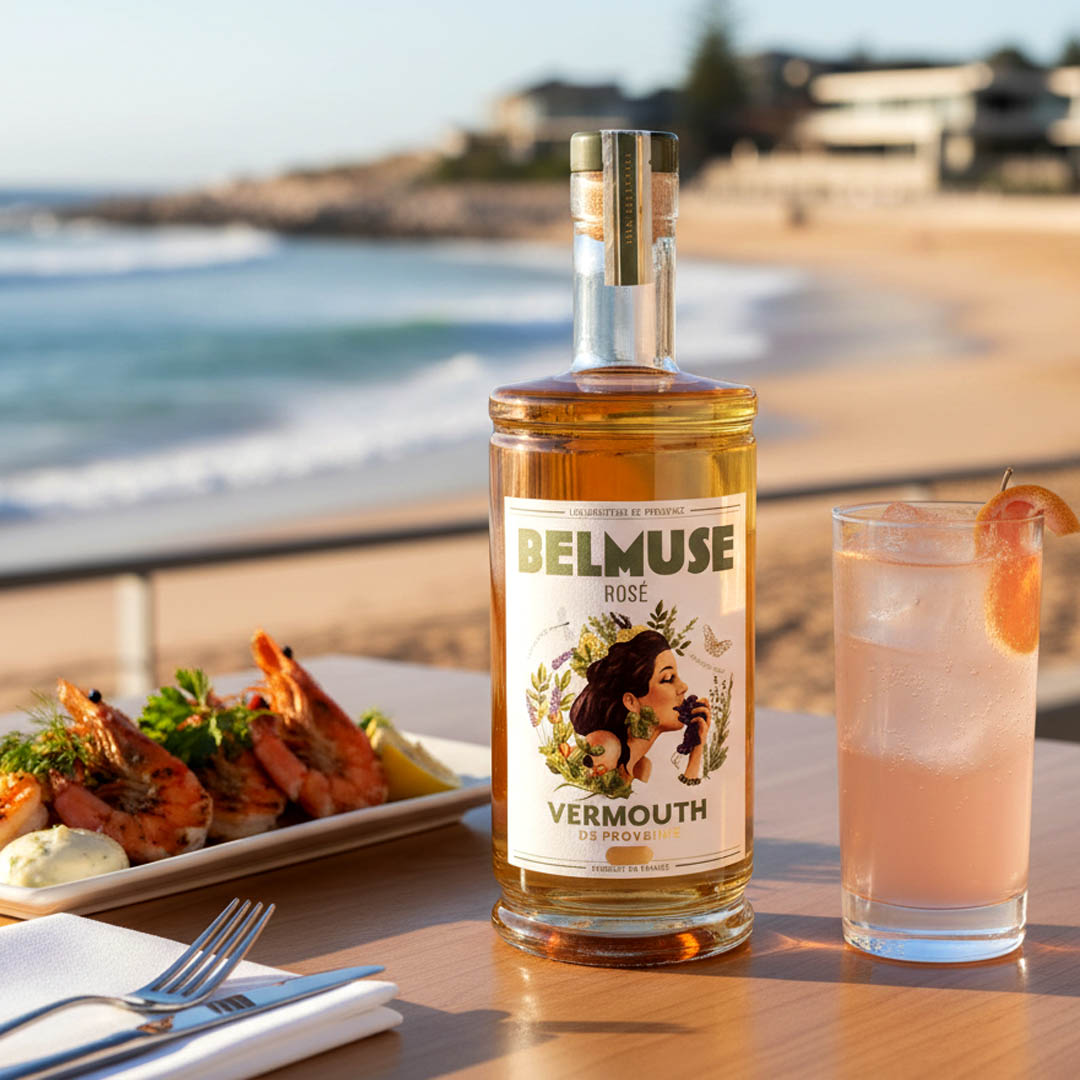
Belmuse Rosé Vermouth
Most people learn vermouth as a binary: dry for Martinis, sweet for Manhattans.
But rosé vermouth has become the modern bridge and it’s worth being precise, because there are (at least) two different ways “rosé vermouth” shows up in the real world.
Below is a quick map of the main vermouth categories, then a tighter focus on rosé vermouth made from actual rosé wine like Belmuse from Provence.
A quick map: the primary vermouth categories
1. Dry Vermouth (French style) Light bodied, clear to pale yellow, typically dry, floral and herbaceous. The classic Martini partner.
2. Sweet Vermouth (Italian style / Rosso) Deep red or amber, often built on a white wine base with caramel for colour. Sweet, spiced, herbal, with dark fruit notes. The backbone of Manhattans and Negronis.
3. Bianco / Blanc (white sweet) Sweet white vermouth with prominent vanilla and botanicals often brilliant in spritz style serves.
4. Extra-Dry Vermouth A paler, lower-sugar take on dry vermouth built for very crisp, herbaceous “bone dry” Martini styles.
5. Rosato / Rosé Vermouth (blend-style) A newer, popular style made from a blend of red and white wines, typically lighter and fruitier than Rosso, with floral lift.
6. Amber / Ambrato Vermouth A sweet vermouth style with a distinct amber colour and a different botanical profile often showing more bitterness than standard red sweet vermouth.
A separate (and important) category: Rosé vermouth made from rosé wine
Here’s the nuance that gets missed:
Not all “rosé vermouth” is created by blending red plus white base wines.
There’s another lane that deserves its own mention:
· Rosé wine vermouth: vermouth where the base is rosé wine produced as rosé (i.e made via rosé winemaking), then aromatised and fortified into vermouth.
Why it matters in the glass:
· The fruit profile can feel more integrated (not “assembled”)
· The texture often reads more vinous and food friendly
· The aromatics can sit higher and cleaner, especially when the producer is serious about botanicals
Spotlight: Belmuse Rosé-wine vermouth from Provence
A great example of this rosé wine vermouth approach is Belmuse Vermouth Rosé, produced by Château de Saint-Martin Cru Classé & Liquoristerie de Provence.
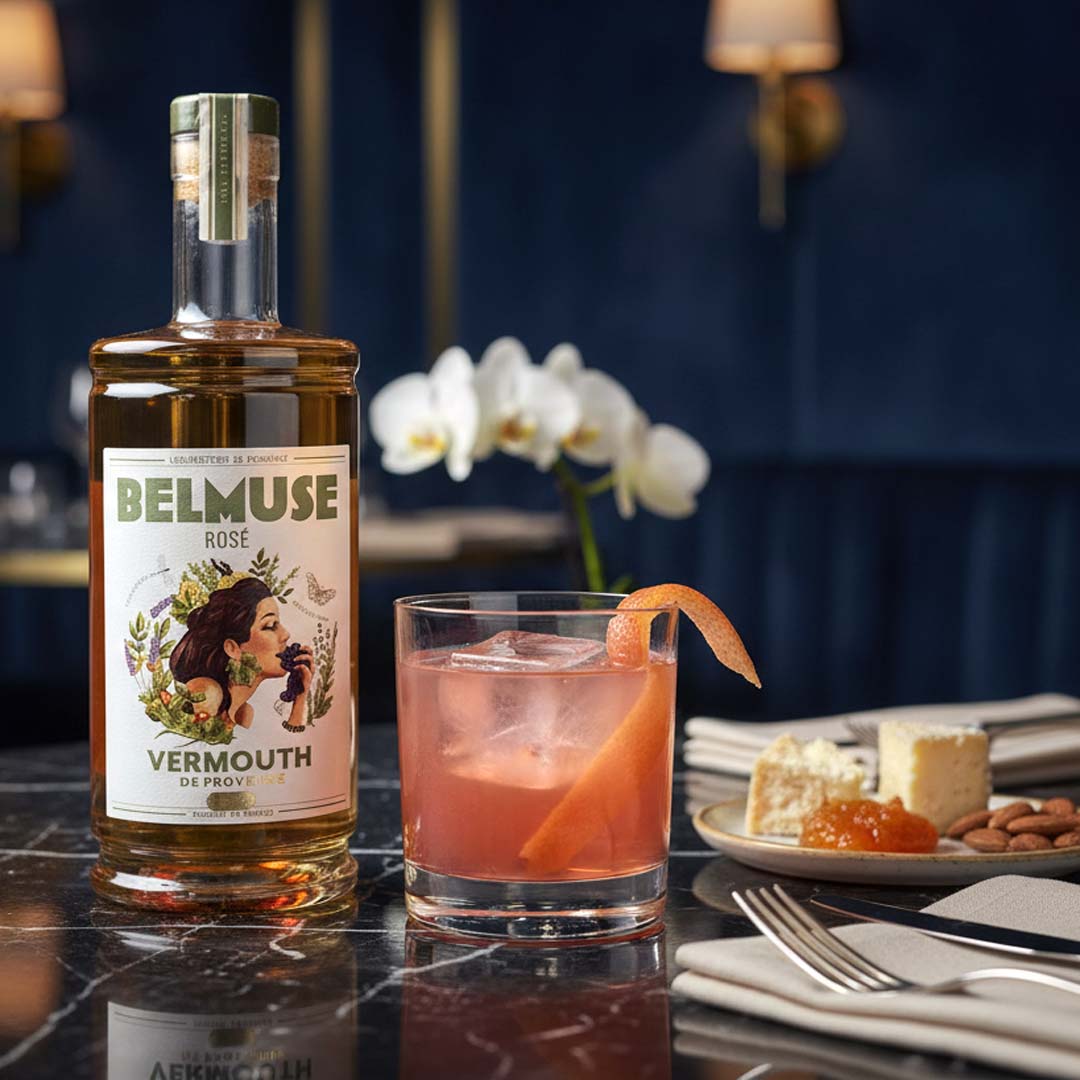
A few producer details worth knowing:
· Based in France, with the producer site listed as https://www.chateaudesaintmartin.com.
· Château de Saint-Martin is described as a 100-hectare estate with 50 hectares of vineyards, with deep historical lineage.
· Their distilling arm, Liquoristerie de Provence, highlights that products are made from plant macerations and infusions (not synthesized aromas) which is exactly what you want to hear when vermouth is fundamentally a botanical product.
In other words: this isn’t just “pink vermouth.” It’s rosé vermouth with a rosé wine foundation, coming from a region that already understands freshness, perfume, and drinkability.
How I’d use rosé vermouth (practical ideas)
· Rosé Vermouth Spritz: soda plus citrus peel and a measured pour of rosé vermouth (let the botanicals do the work)
· Lighter Negroni : swap sweet vermouth for rosé vermouth to brighten the drink and pull back the heaviness
· Aperitif serve: chilled rosé vermouth over ice with a simple garnish Easy, elegant, and very “now”
The takeaway
If you stock vermouth for exactly two drinks, you’ll buy two bottles.
If you stock vermouth as a category, rosé vermouth becomes the bridge that opens up a whole new set of serves especially when it’s built on real rosé wine, not just a red/white blend.
If you’ve been exploring rosé vermouth lately, I’d love to hear what you’re pouring it in.
Login to Barmania for details on Belmuse